
The One-Sentence Rule
If you can see daylight, feel a draft, or find gaps around the edges of your garage door, you are paying to heat and cool the outdoors — but only if that garage shares walls, ductwork, or a room with the rest of your house. That last part is the whole argument, so let's settle it properly.
Why an Attached Garage Changes Everything
A detached garage out back can be as drafty as a barn and it won't touch your utility bill much, aside from making your own tools and car cold. An attached garage is a different story. It usually shares at least one wall with living space, and in a lot of Tulsa-area homes it also shares a ceiling with a bedroom above, or has HVAC ductwork running through it to reach another part of the house. When that garage is leaking air like a sieve, it's basically an unheated, uncooled room sitting right next to — or under — rooms you're actively paying to keep comfortable.
In winter, a leaky garage door lets outside air pour in, which drops the garage temperature close to whatever it is outside. That cold air pulls heat out of the shared wall and any ductwork sitting in that space, and your furnace runs longer to compensate. In summer, the same door lets superheated air into the garage during the long, hot stretch Tulsa gets every year, baking that shared wall and any ducts running through it, which makes your AC work harder too.
The Exceptions That Actually Matter
Before anyone wins the argument, a few things narrow down how much this really costs:
- No shared wall or ductwork in the garage: if the garage is attached but tucked at a corner of the house with no ducts running through it and no rooms directly above, the leak matters a lot less.
- An insulated vs. non-insulated door: a solid, non-insulated steel door with a worn-out bottom seal is a much bigger loser of conditioned air than an insulated door with the same worn seal, because the door itself isn't doing any work to slow heat transfer.
- A door that doesn't close flush: if the door is sagging, off track, or doesn't seat evenly at the bottom because of weak springs or worn rollers, no amount of new weatherstripping will fully fix the leak. The door has to sit flat and level against the seal to actually seal.
What's Usually Actually Leaking
It's rarely the whole door. It's almost always one of these:
- A flattened, cracked, or torn rubber seal along the bottom — the most common failure point after a year or two of Tulsa heat, UV, and gravel/dust exposure.
- Gaps along the sides and top where the weatherstripping has shrunk, come loose, or was never properly fitted.
- Warping in the panels themselves, which shows up after hailstorms or sustained high wind — common enough here that it's worth checking the door after any serious storm.
- A door that no longer closes all the way because of a balance problem, which often traces back to worn springs rather than the weatherstripping at all.
A Two-Minute Test You Can Do Tonight
- Turn off the garage lights, close the door, and have someone stand outside with a flashlight while you watch from inside — any light sneaking through is air sneaking through too.
- Run your hand slowly along the bottom and side seals on a cold or windy day. A steady draft means the seal isn't doing its job.
- Close the door on a strip of paper or a dollar bill at a few points along the bottom. If it pulls out with no resistance, the seal isn't making contact.
What Actually Fixes It (and What Doesn't)
Swapping out a worn bottom seal and side weatherstripping is a relatively inexpensive fix, often in the range of $50–150 in parts and labor depending on the door, and it solves the problem in most cases. If the door is older, uninsulated, and visibly warped or dented from years of Tulsa hail and wind, weatherstripping alone won't get you there — at that point, an insulated replacement door is the real fix, and it also holds up better against the next round of severe storms. If the issue is really that the door won't close flat because of weak or broken springs, no amount of new rubber will seal a door that isn't sitting in the right position — the springs need attention first.
When to Call Tulsa Garage Door
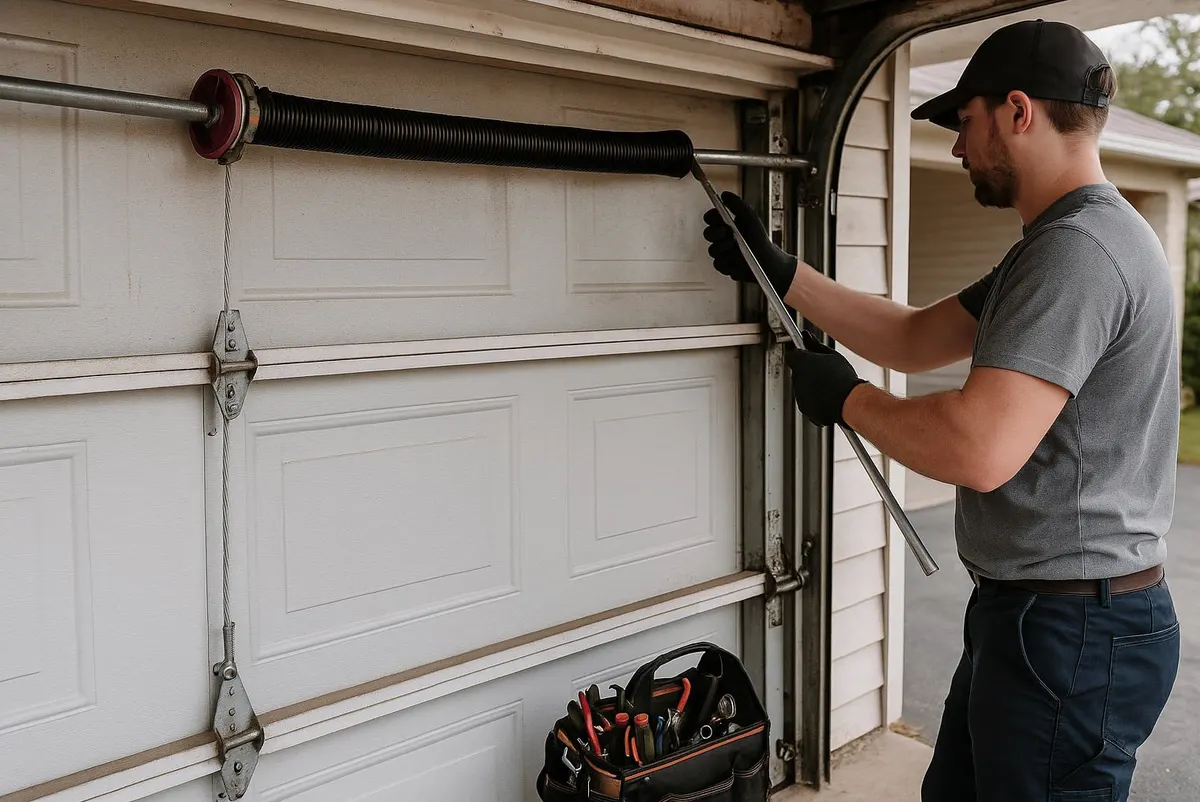
If the flashlight test shows daylight, or the door is visibly sagging, warped, or slow to close all the way, it's worth having it looked at before winter settles in and before next summer's heat arrives. Tulsa Garage Door can run a full Preventive Maintenance check — testing balance, inspecting seals, lubricating hardware, and tightening hardware that's worked loose from wind and temperature swings — and handle straightforward Garage Door Repair like weatherstripping replacement or panel fixes on the spot. If the real issue turns out to be worn springs keeping the door from seating properly, that's a job best left to a technician rather than a DIY fix, given how much tension those springs hold.
If you're in Tulsa, Broken Arrow, Owasso, Bixby, Jenks, Sand Springs, Sapulpa, or Claremore and you want a straight answer about whether your garage door is actually costing you money, give Tulsa Garage Door a call. We'll tell you exactly what's leaking, what it'll take to fix it, and settle the argument for good.