
No, the Shop Door Isn't "Just a Bigger Garage Door"
If you and your spouse have been arguing over whether the roll-up door on the shop, warehouse, or side business needs its own maintenance plan, here's the answer — and here's what another season of 'it's fine, it's just a door' actually costs. A commercial-grade overhead door that fails mid-shift usually means a half day of lost work waiting on a tech, inventory sitting exposed to dust, wind, or rain, or a torsion spring under far more tension than most homeowners expect letting go without warning. None of that is cheap, and none of it is quick to fix once it happens instead of before.
Why It's Actually a Different Piece of Equipment
A door on a house garage and a door on a shop or warehouse may look similar from the driveway, but they're built and used nothing alike.
- Cycle count: A residential door opens a handful of times a day. A commercial door on a working shop can open and close dozens of times a shift, which wears springs, rollers, and cables far faster.
- Panel and track weight: Commercial doors are often heavier-gauge steel with reinforced struts and wider tracks, partly to handle wind load — which matters here given how quickly a storm front can bring sustained wind and hail through the area.
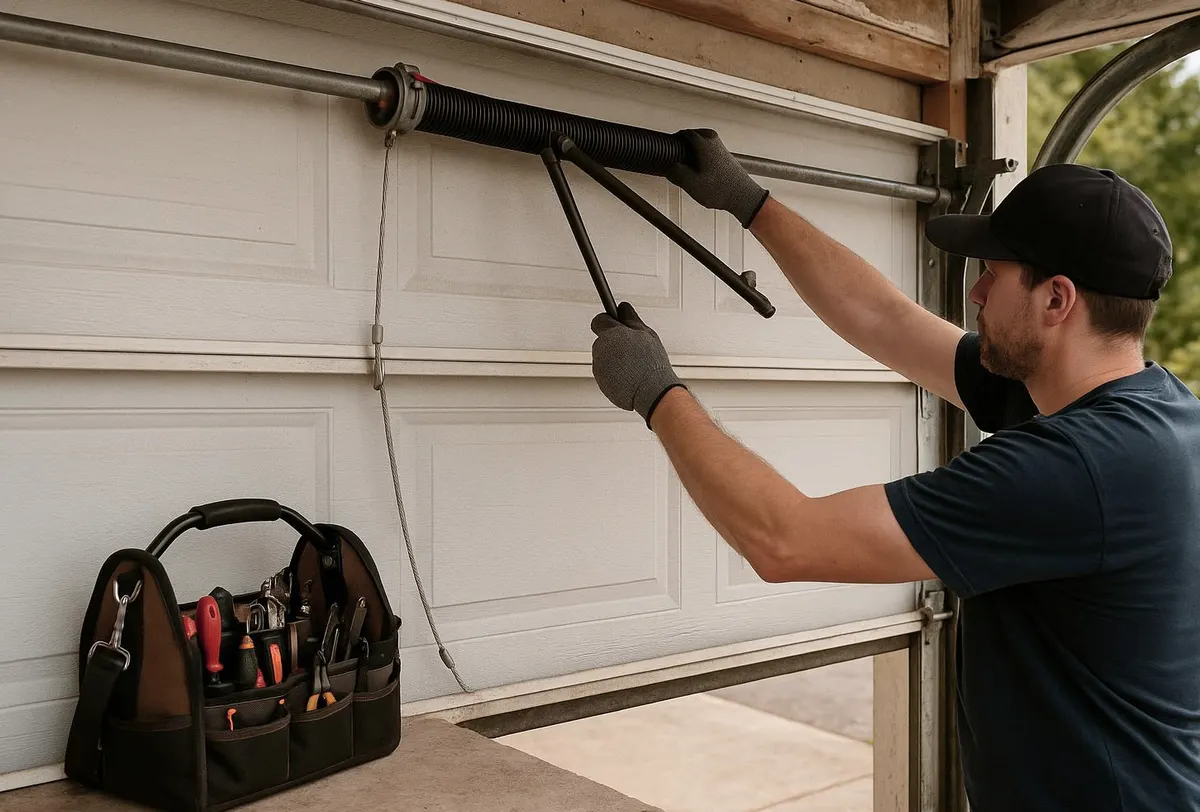
- Springs: Commercial torsion springs are sized and rated for much higher cycle life than the springs on a house door. Using the wrong spring, or never replacing one that's past its rated cycles, is how you end up with a sudden failure instead of a scheduled swap.
- Operators: Many commercial doors run on chain-hoist or jackshaft operators rather than a standard residential opener, and often include photo-eye reversal and safety edges because of how frequently people and equipment pass through the opening.
What Maintenance Actually Looks Like
A residential door can often get by on a check twice a year. A door cycling dozens of times a day on a shop or warehouse needs closer attention, because small problems compound fast under heavy use:
- Monthly visual inspection of cables, rollers, and track alignment, not just an annual once-over.
- More frequent lubrication of hinges, rollers, and bearing plates — heavy daily use dries out lubricant faster than it does on a door that opens twice a day.
- Checking photo-eye alignment and the bottom seal, since a door that's constantly cycling pushes more dust and debris into the track than a residential door ever sees.
- Inspecting panels for hail dents or wind-related warping after a storm, since a dented panel on a wide commercial door can throw off alignment in a way it wouldn't on a smaller residential one.
What the Coming Season Changes
Heading into late fall and winter, a few things move up the priority list. Worn weatherstripping and bottom seals let in more cold air and moisture once temperatures drop, and in the colder stretches, tracks can collect enough moisture to ice over if the door's been sitting open or the seals are shot. If the shop runs an automatic opener, it's also worth checking whether it has backup power, since ice storms are far more likely to knock out power for a stretch than summer storms are. Fixing seals and checking the operator now is a lot cheaper than an emergency call once the first hard freeze hits.
When to Call Tulsa Garage Door
If the shop door is cycling more than a few times an hour, if it's never had a proper commercial-grade spring inspection, or if last season's hail or wind left dents you've been putting off, it's time to have it looked at before it becomes a mid-shift failure. Tulsa Garage Door handles Commercial Garage Doors and Preventive Maintenance for businesses across Tulsa, Broken Arrow, Owasso, Bixby, Jenks, Sand Springs, Sapulpa, and Claremore. We'll size springs correctly for your actual cycle count, check the operator and safety reversal, and catch wind or hail damage before it turns into a closed shop and an angry crew.
Call Tulsa Garage Door today to get your commercial or warehouse door inspected before winter settles in across the Tulsa, OK area.